Farmers & Rural Families
The profile records education on government schemes, farming practices, agricultural inputs and dairy skills. Contact SGVBS for the dates, locations and records for a particular activity.
This page describes recorded work. Contact SGVBS to confirm what is available now.
Read about the records ↗Work in this domain.
Explore the projects and activities recorded in SGVBS's programme documents and field archive.
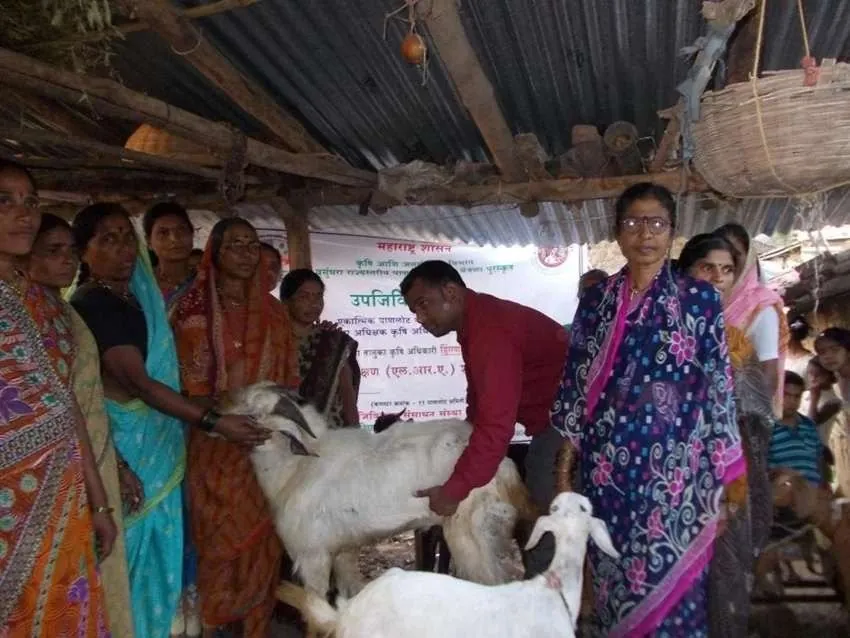
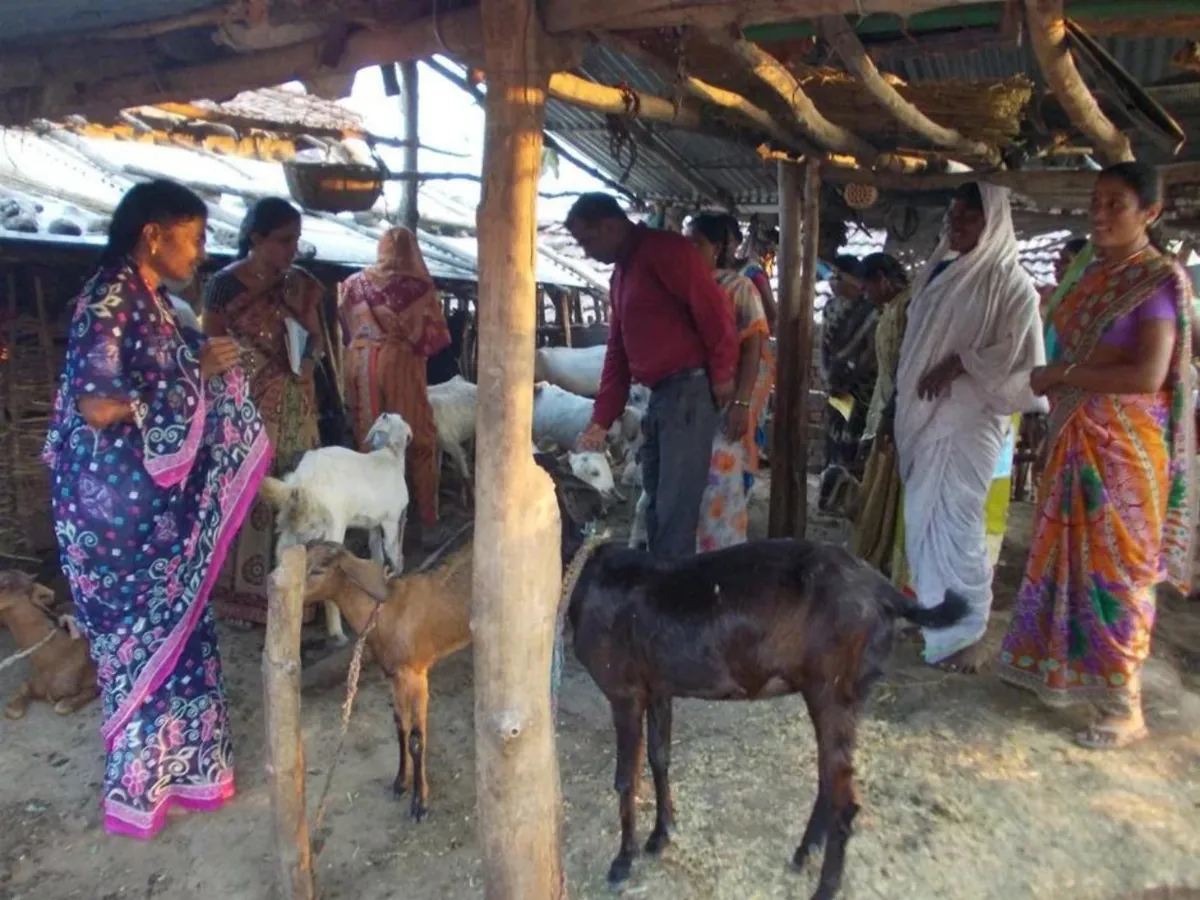
Dairy-sector training and farmer study tours
- Dairy-farming, milk-production and milk-product learning, with exposure visits.
- A Buldhana certificate records a completed study tour covering dairy and agricultural learning sites in Maharashtra.
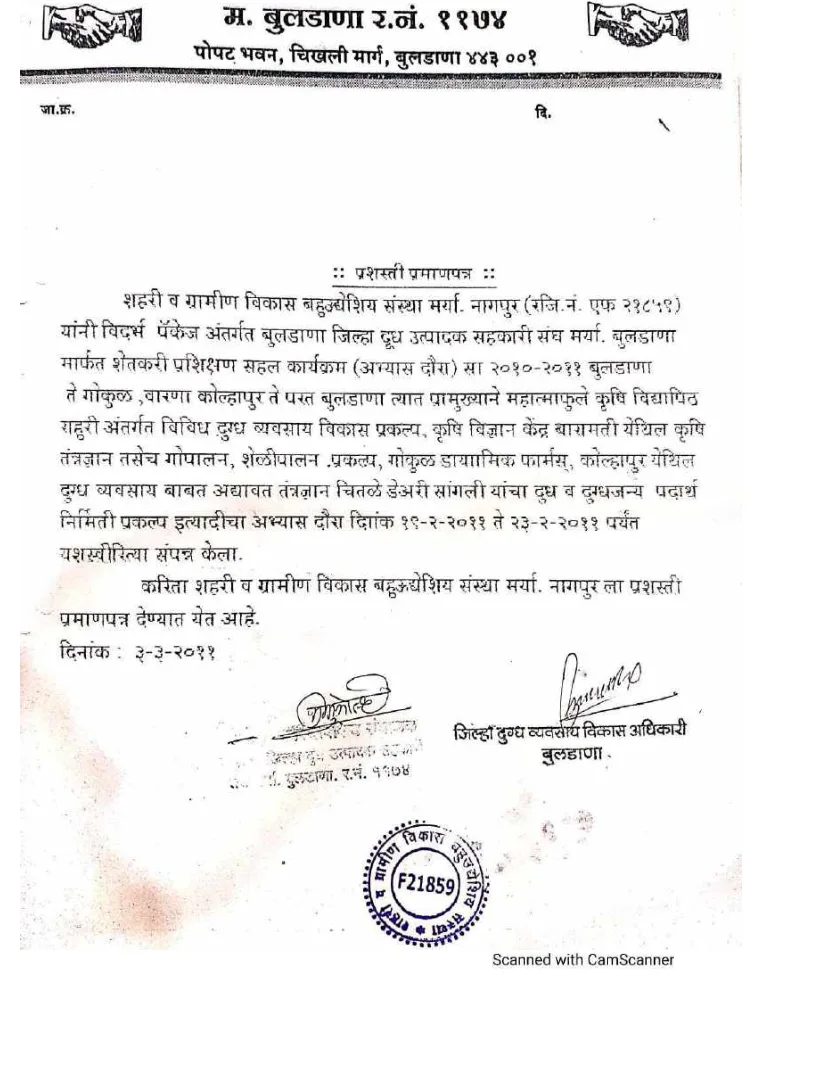
Source: Organisation Profile, November 2026, pp. 7-8 and 13; Past Projects Certificate and Orders, pp. 1-3, 6 and 12.
ATMA dairy-farmer training arrangements
- The orders cover dairy training and exposure-visit arrangements, including travel, stay and learning at Rahuri Agricultural University.
- Other letters discuss an Anand, Gujarat dairy exposure visit.
Source: Past Projects Certificate and Orders, pp. 3, 6 and 8-12.
Orders and correspondence establish the assigned scope. They are not treated as completion certificates for every visit.
Pond rejuvenation and soil-water conservation
- Water-body rejuvenation and soil conservation, including field work shown in the archive.
- The programme record connects this work with rural water management.
Source: Organisation Profile, November 2026, p. 9; Organizational Profile & CSR Dossier, 2026, p. 7; Photo Parts 1, 2 and 4.
No water-storage, irrigation or income improvement is claimed from photographs alone.
Sediment-Free Dams and Sediment-Rich Fields
Dam desilting and use of sediment on agricultural land under Gal Mukta Dharan - Gal Yukta Shivar.
Source: Organisation Profile, November 2026, p. 15; Organizational Profile & CSR Dossier, 2026, p. 7.
Tribal Prosperity Initiative
- Livelihood development for Scheduled Tribe communities.
- The inspection pack records training areas such as agro-processing, irrigation, organic farming, dairy, goat and poultry rearing, fodder, handicrafts, rainwater harvesting, micro-enterprise and watershed management.
Source: Tribal livelihood inspection and recommendation pack, March 2025, pp. 1-3, 5-10.
The District Collector recommendation is dated 15 March 2025. A recommendation or application is not proof that a Ministry grant was released.
Area Development and watershed-linked training
- The organisation profile describes an Area Development Programme for sustainable rural development.
- The past-orders pack also records watershed-linked training and livelihood-resource activities under IWMP.
Source: Organisation Profile, November 2026, p. 8; Past Projects Certificate and Orders, pp. 18 and 32-47.
Related records are grouped here; they are not assumed to be one single sanctioned contract.
Biochar and sustainable-agriculture initiative
Programme material describes farm-residue use, biochar and soil-health work within the sustainable-agriculture portfolio.
Source: 2026 dossier, p. 4; SGVBS annual-report narrative.
No issued carbon credits, certified removals, farm payments or verified yield gains are claimed.
Programme photo archive.
Browse photographs by activity. Dates and places are given only where the source identifies them.
Rural-livelihood activity archive
Dairy-sector training and farmer study tours
Read the project record ↑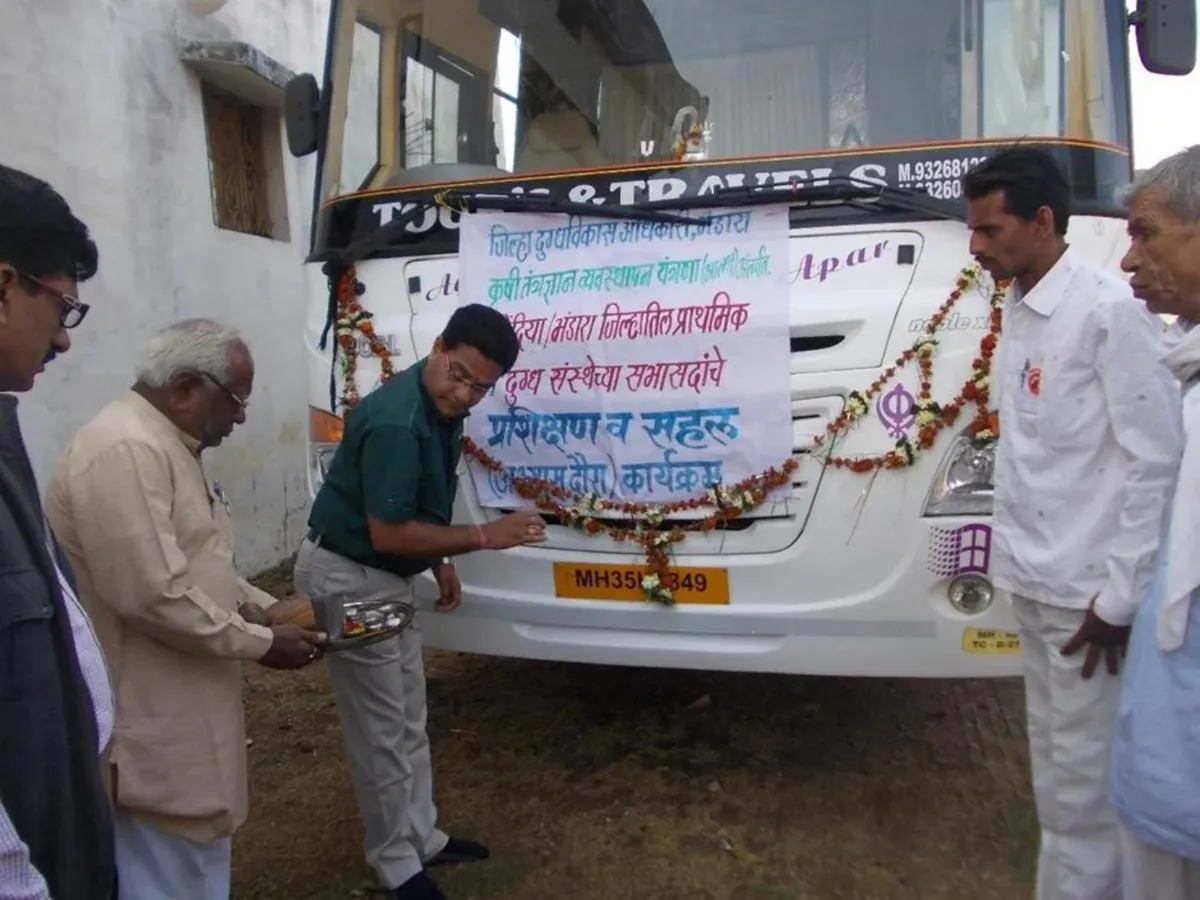
Areas of work.
Farmer education
Information on schemes and farming practices, as described in the profile.
Dairy-skills learning
Historical dairy-training activity forms part of SGVBS's skills record.
Farm-based livelihoods
Agriculture and horticulture support are described in the programme scope; dates and outcomes need specific records.
Dates and sources.
Reporting period
Project dates and reporting periods are given with each activity above. Historical records are not a current programme timetable.
Source basis
SGVBS organisation profiles, annual reports, training orders, inspection records and photographs. Each project entry names its supporting document and page where available.
Read the context. Ask for the record.
Ask about this programme.
Ask about the location, current activities and ways to take part or offer support.